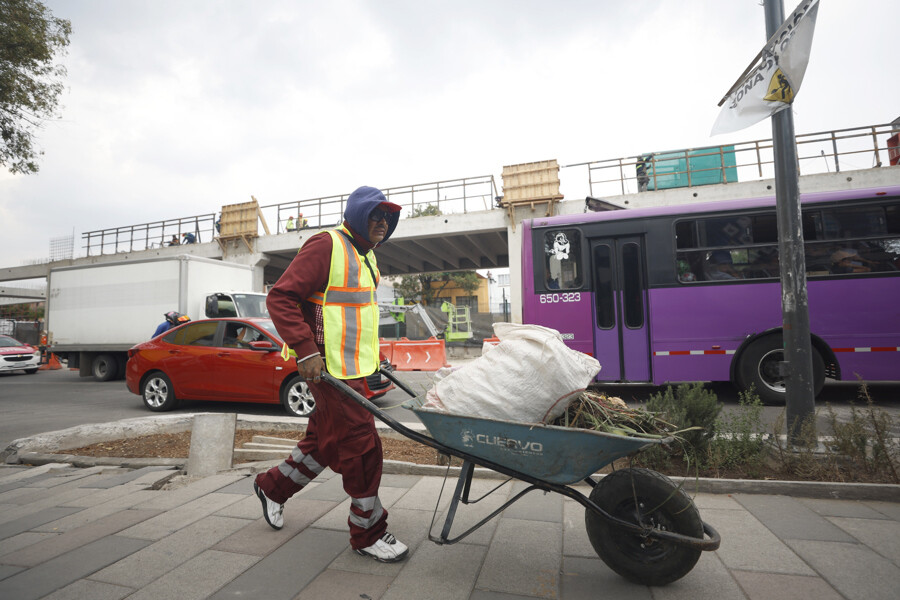
Two months before the start of the 2026 FIFA World Cup, its impact is notably felt in Mexico City, one of the host cities, where residents report vibrations and damage to their homes, as well as constant dust and excessive noise. In the center of the Mexican capital, just a few steps from Calzada de Tlalpan, Doña Rosy runs a food stall outside her house, meters away from the ongoing construction in the area. There, near a section of Tlalpan where the city government is building an elevated park and a 30-kilometer bike lane as part of World Cup preparations, a part of her home's roof recently collapsed. «The roof collapsed. Now, she says, the problem is the dust: «I'm cleaning daily, around the clock». Like Doña Rosy, other neighbors are also facing disruptions in their daily lives since February 2025 when the works began, which are estimated to end in May, a month before the World Cup. «24 hours of noise, 24 hours of dust, 24 hours of water and traffic,» summarizes Marco, who lives and works right in front of the works, while also denouncing that the drilling has caused constant waterlogging. A few streets away, Jonathan Azpeitia, owner of the restaurant Coco Pizzería, describes how the vibrations from the excavations are felt inside his establishment. «As if a truck were passing suddenly, or more of an oscillatory tremor, a bit like a shudder,» he explains, moving his hand up and down. To this are added power outages, transformer explosions, and road closures that make access to the area difficult and reduce the flow of customers, he relates. But beyond the immediate annoyances, he is concerned about the lack of attention to everyday problems that, he says, have gone unresolved for years, such as waterlogging and potholes. In response, he questions the promotion of million-dollar projects linked to the World Cup that, in his opinion, respond more to a need for «image» than to the population's needs. «I don't think their priorities match ours (...) There are priorities to address before hosting a World Cup,» he opines. Photo showing renovation works on the Collective Transportation System (Metro), and Calzada de Tlalpan this Tuesday, in Mexico City (Mexico). We were even trembling from the noise and the drilling of the floor, yes, it was shaking,» he tells EFE about what happened a few weeks ago, although he highlights that the authorities quickly came to address the situation. Photo showing renovation works on the Collective Transportation System (Metro), and Calzada de Tlalpan this Tuesday, in Mexico City (Mexico). EFE/ Sáshenka Gutiérrez. The aftermath that concerns him He also criticizes, like other neighbors, the lack of prior consultation and clarity about the works and their long-term benefits. «I would have liked them to explain what comes after (...) not just for the World Cup, but for what follows,» he adds. Neighbors doubt that the works will be completed on time and warn that, if they are, they will not necessarily be done well, as has happened with other constructions. «If they finish on time, I don't know if they'll finish it well,» says Jonathan. In a city marked by unstable soils and seismic history, the concern is heightened. «If there's no maintenance, it will collapse; if it's poorly done, it will crack,» adds Marco. In recent weeks, the alarm increased after the collapse of a building under demolition on Tlalpan in early March, which left one person dead and several trapped. Although the head of government of the capital, Clara Brugada, ruled out that the collapse was related to the World Cup works, doubts among neighbors grew in the face of the constant vibrations they report. The works are part of the preparations for the 2026 World Cup —which Mexico is organizing with the United States and Canada— and include the construction of the ‘La Gran Tenochtitlán’ bike lane on Tlalpan, one of the main arteries that connects to the Azteca Stadium, venue for the opening match on June 11. In addition to the capital, Mexico will also host matches in the cities of Guadalajara and Monterrey. Photo EFE.